June Skies
Summer in the Northern Hemisphere where night starts later and ends earlier!!
June presents a busy month for skywatchers, albeit with shorter nighttime lengths. Seasons officially change on June 21st with the June solstice. Our Moon passes through its regular series of lunar phases that concludes with a Full Moon on the 29th. The Moon has an elliptically shaped rather than circular-shaped orbit and a result of this is that the Moon reaches its closest approach to Earth (perigee) on the 14th and its farthest distance (apogee) on the 1st and again on the 28th.
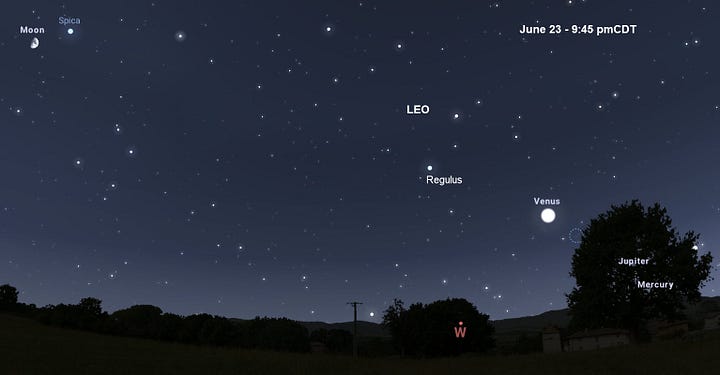
There will be a few conjunctions with several planets and bright stars like Spica, Antares, and the Pleiades cluster. In addition to these lunar conjunctions, observers can look forward to several notable planetary events independent of the Moon, including a conjunction between Venus and Jupiter on the 9th. Mercury reaches its peak visibility on the evening of June 15th when it is at greatest eastern elongation, and at its highest above the horizon at sunset.
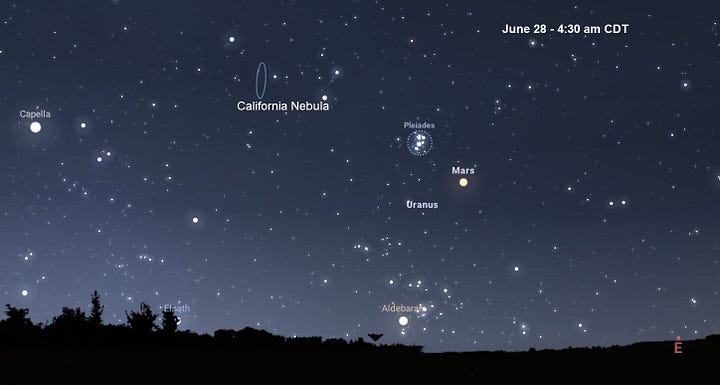
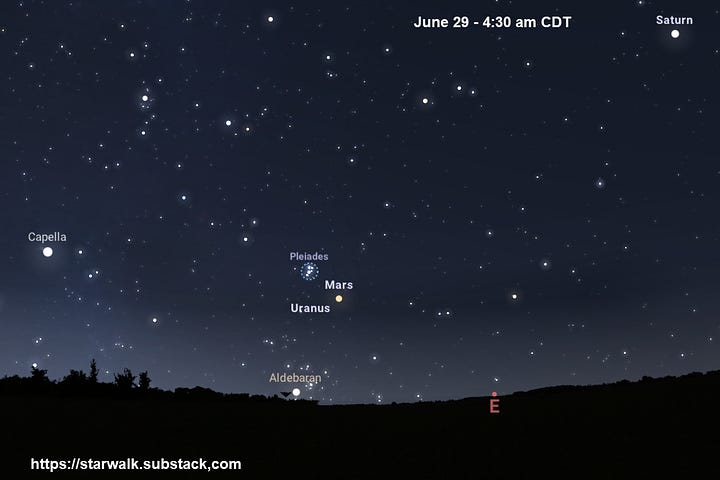
Up before the Sun? Now is your chance to see the ‘Red Planet’, Mars, in conjunction with the Pleiades open star cluster at month’s end.
Two sets of graphics to assist in your celestial viewing.
Click here for a good online star map you may set to dates and times of your choice.


June 2026
01. Moon at Apogee
02. Mercury near M-35 Star Cluster
07. Moon at Ascending Node
Venus 4.6°S of Pollux
08. Last Quarter Moon
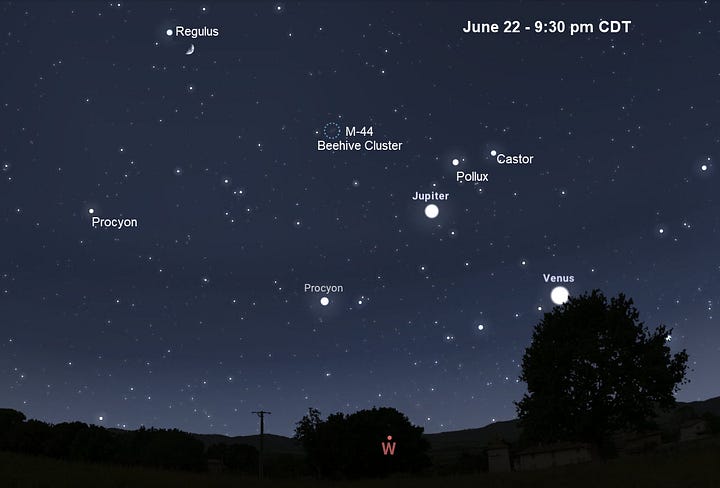
09. Venus 1.6°N of Jupiter
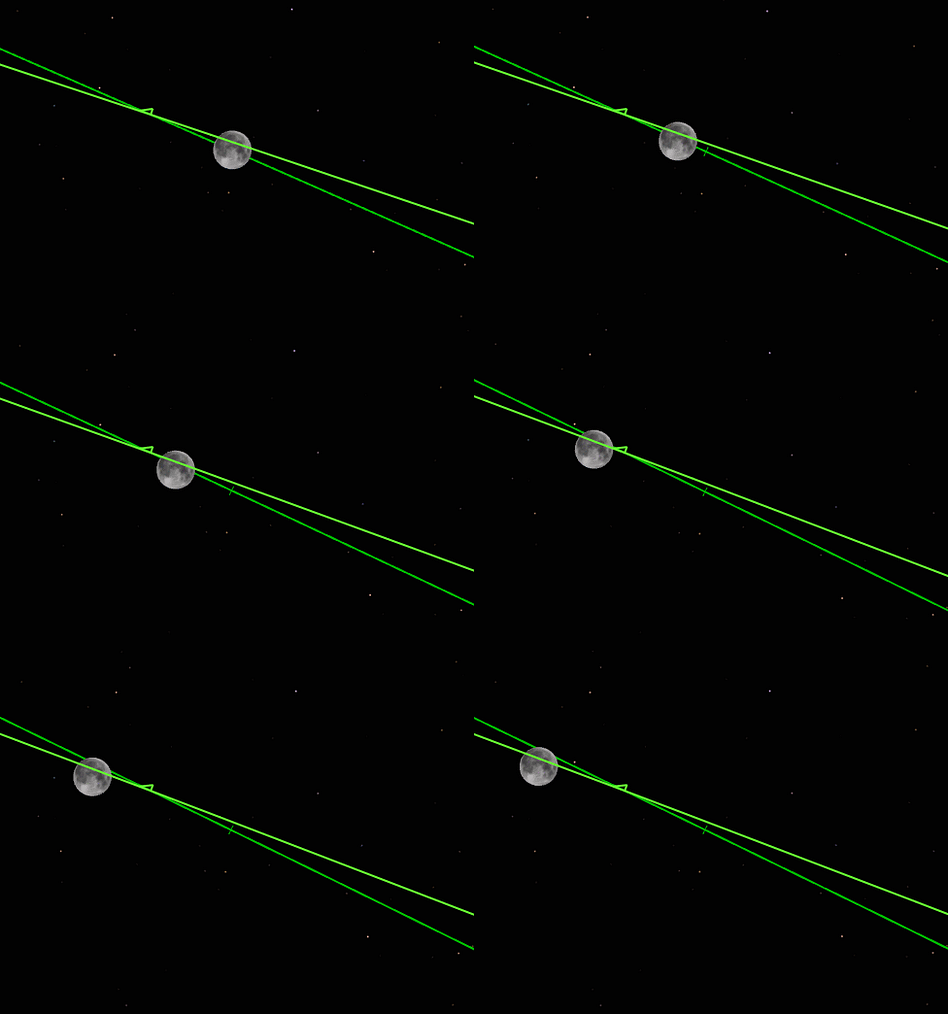
13. Pleiades-Moon Conjunction
14. Moon at Perigee: 221,951 miles (357,196 km)
New Moon
15. Mercury at Greatest Elongation: 24.5°E
16. Mercury-Moon Conjunction
17. Venus - Pleiades - Moon Conjunction
18-19. Moon passes the star Regulus
Moon at Descending Node
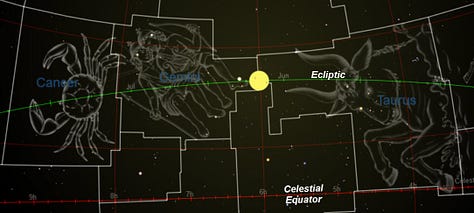
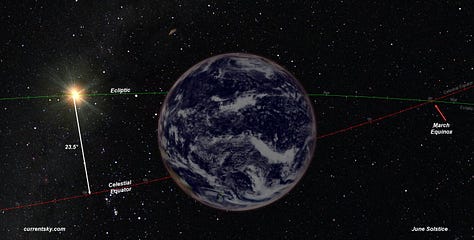
21. June Solstice 4:24 am EDT
First Quarter Moon
22. Spica-Moon Conjunction
26-27. Moon passes Antares
28. Moon at Apogee: 252,443 miles (406,267 km)
Mars 4.3°S of Pleiades
29. Full Moon