
Standing on a Rock
What are you standing on?
As you walk around outside do you ever wonder about the ground beneath your feet? What do you know about the Geology or Geography of where you live? Understanding that some of us are ‘city-bound’ thinking about what is beneath the artificial man-made bedrock of asphalt and concrete, may be a stretch but it is nonetheless important. Thinking ahead toward the future, one interesting and concerning reason has to do with the weight of a city and its impact on the ground it is built on. For example, the overall weight of New York City is causing subsidence, the slow sinking of the Earth’s surface. NYC, sitting on a bedrock of metamorphic rocks, is sinking, albeit slowly, but still, it is sinking. Parts of this city are at sea-level, so a sinking city will have potential problems with flooding in the future.
Are other cities also facing the same future? If you were living in a coastal city like San Francisco, you may face a similar future? This is sort of a reverse sea level rising issue but not because of climate change.


Like many of us I’ve lived most of my life walking around on top of sedimentary rocks deposited by ancient seas and lakes. In parts of the Midwest where I lived the sedimentary rocks are buried underneath glacial deposits that gave rise to some of the best soil for farming in the country. In the western parts of Texas, the Big Bend, where I once lived and walked on Cretaceous period deposits of sedimentary rocks. Much of which is exposed in road cuts, while in other areas are overlain with Cenozoic Era lava flows.
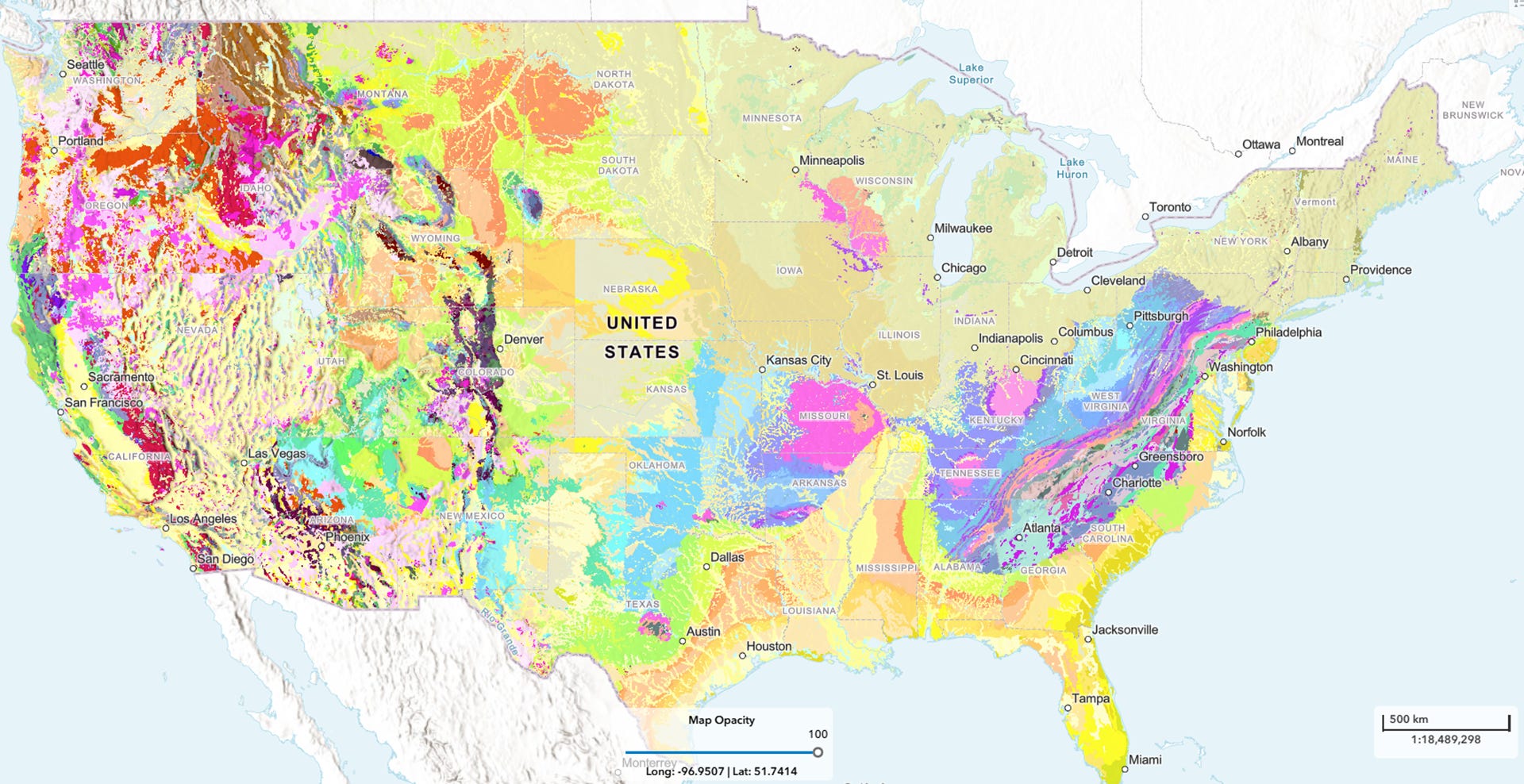
So, what are you standing on and how would you find out? At the national level there is the USGS. The United States Geologic Survey has a huge source of information and data on the entire United States. At the state level every state has its own Geologic Survey responsible for its specific Geology. Like the USGS, your state geological survey is a source of maps (downloadable or online), data, and publications related to that specific state. Use a Search Engine to find your state’s geological survey by typing, for example, the name of your state followed by ‘geological survey’. Many colleges and universities have resource libraries with map and rock collections and online resources. In my home state we can find a variety of maps, publications, and data from the Missouri Geological Survey.
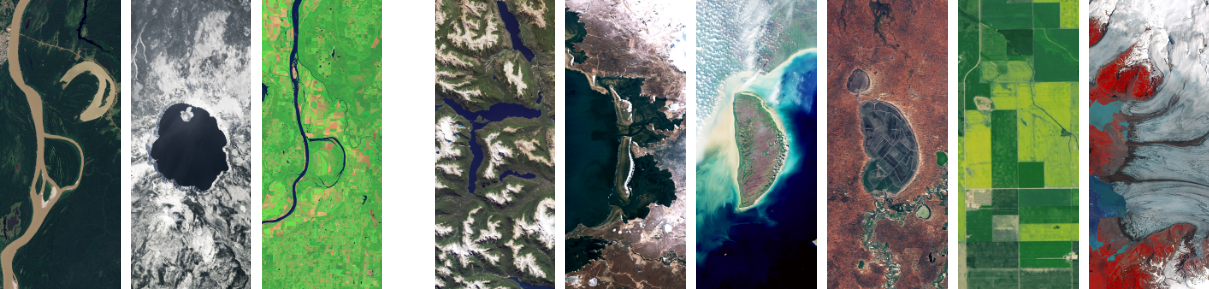
Here’s a fun thing to do. Using Landsat imagery to make the letters and write your name. My name using Landsat imagery: Bob Riddle
Use these resources to learn more about what’s beneath your feet.
Missouri Geological Survey--dnr.mo.gov/about-us/missouri-geological-survey
National Geologic Map Database--ngmdb.usgs.gov/ngmdb/ngmdb_home.html
Rockd--rockd.org/
Macrostrat—macrostrat.org/
The Cooperative National Geologic Map--ngmdb.usgs.gov/nationalgeology/
The National Map--usgs.gov/core-science-systems/national-geospatial-program/national-map
TopoView-USGS--ngmdb.usgs.gov/topoview/
The Weight of New York City--usgs.gov/programs/cmhrp/news/weight-new-york-city
USGS MapView--ngmdb.usgs.gov/mapview/
Great set of links-interests in science are often multidisciplinary!